


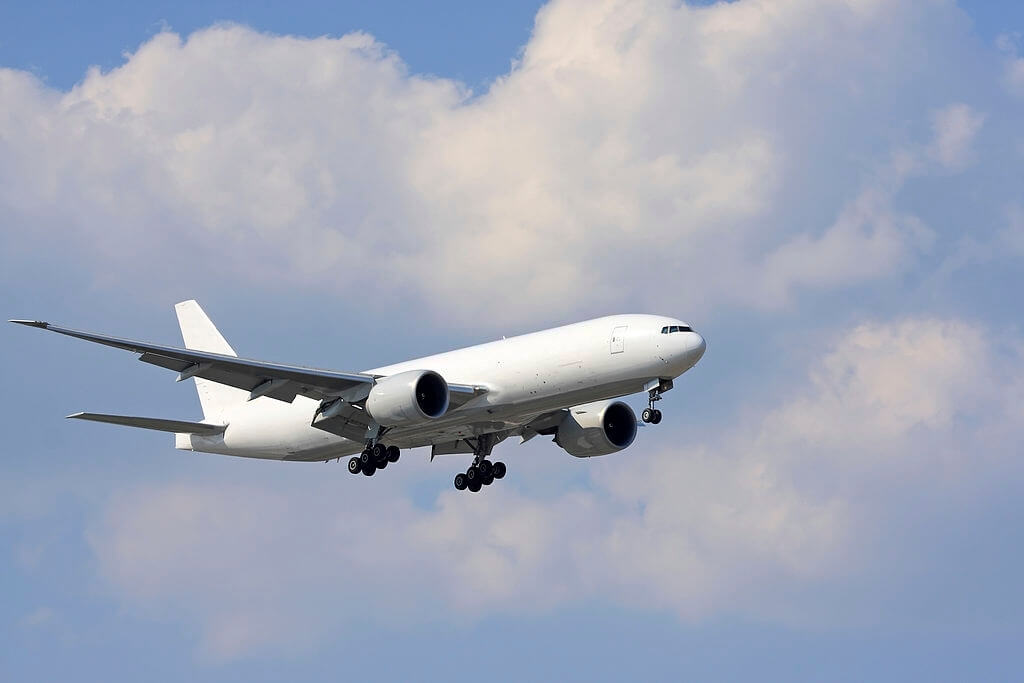
Air freight is the second most popular method after sea freight in international trade.
Air freight typically requires fast delivery and is used for transporting high-value goods.
There are two methods of air freight: Air cargo (standard transport) and Express (express delivery).
ECO is a company that provides air freight services using both methods.
Air freight costs for export goods:
- Air Freight – Air freight charges
- AWB – Airway Bill: bill of lading fee – Unit (Shipment) – Mandatory
- X-ray fee: Security screening fee – Unit (kgs) – Mandatory
- TCS fee: Warehouse operating fees: loading, forklift, workers, etc. This fee is collected by the warehouse and invoiced; the forwarder can pay it on your behalf and issue an invoice – Unit (kgs) – Required
- AMS – AMR – ENS: Goods control system declaration fee; each country or region will have a different name – Required
- Other fees (if any): Depending on the time, importing country and airline – Optional
Air freight costs for imported goods:
- Air Freight – Air freight charges
- D/O: Delivery Order: Delivery order fee – Unit (Shipment – Lot) – Required
- Handling fee: Fee for tracking and handling from the time the shipment leaves the exporting country until it is imported – Almost mandatory
Guide to calculating chargeable weight
2 ways to calculate the weight of goods to determine the shipping price range, also known as CW (Chargeable Weight) calculation
Weight of goods including packaging: Gross Weight – GW
Weight This is the actual weight of the goods and packaging.
Chargeable Weight (CW)
Chargeable weight will be calculated using the volume of the package according to the following two formulas:
Formula 1: (Number of packages x Length x Width x Height) / 6000 (units of Length, Width, Height are centimeters) ==> Converts to kgs
Formula 2: (Number of packages x Length x Width x Height) * 167 (units of Length, Width, Height are meters) ==> Converts to kgs
Whichever weight (GW) or CW is greater will be used to calculate the shipping cost. The final weight used to calculate the shipping price is also the Chargeable Weight.
Example: You are shipping a consignment with a Gross Weight (GW) of 20 kgs (including packaging) and packing it in a box measuring 60*60*50 cm.
Converting volume to weight: (60*60*50)/6000 = 30 kgs or (0.6*0.6*0.5*)167 = 30 kgs.
Therefore, the chargeable weight for shipping is 30 kgs.
If you pack it in a smaller box measuring 50*50*30 cm = 0.5*0.5*0.3 m,
Converting volume to weight: (50*50*30/6000) = 12.5 kgs or (0.5*0.5*0.3*167 = 12.5 kgs.
Therefore, the chargeable weight for shipping is 20 kgs.