

What is a Tank Container? Uses and Sizes of Tank Containers Today
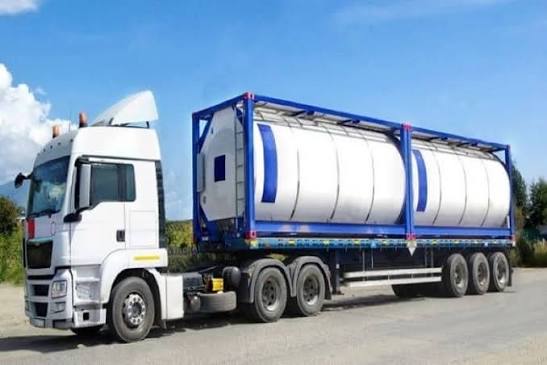
A tank container is understood to be a type of container with a basic frame structure such as corner columns, longitudinal beams, and transverse beams, similar to the frame structure of dry containers. It is also made of specialized CORTEN STEEL with a thickness of 4mm to 7mm. The tank itself is made of metal alloy sheets, aluminum alloy, stainless steel, or composite materials of suitable thickness, connected by welding or mechanical joints to form a closed cylinder. The empty interior space is used to store and preserve goods, usually in liquid form. The opening consists of a round lid attached to the center of the tank’s roof with a latch for sealing. If you are also looking to learn about this type of container, the article below will provide you with complete and detailed information!
What is the concept of a tank container?
Tank containers (or ISO tanks) are a relatively new type of container in Vietnam, but they are quite familiar to professionals in the transportation industry. This type of container is unique, as its name suggests, because the body is designed like a large tank used for storing and transporting goods.
Tank containers are a relatively new type of container in Vietnam.
In addition, tank containers have a standard ISO 20-foot frame, and the remaining space inside is usually connected to a liquid storage tank that is pumped in from the top and then drained out via a pump to the appropriate capacity. However, the length, width, and height of the tank depend on the number of feet. Furthermore, specialized tank containers are often used to transport liquid materials such as water, mercury, oil, etc.
By now, you probably have a basic understanding of what a tank container is. In the following section, we will explore the uses of this type of tank container!
What are the common uses of tank containers today?
Currently, there are many types of containers with unique properties that help improve the transportation and preservation of goods. You may already know the uses of common container types such as dry containers, refrigerated containers, and open-top containers, but many people may not be familiar with tank containers.
Tank containers are designed to transport liquid goods such as oil, hazardous chemicals, mercury, etc., which not all types of containers can replace. Below are some outstanding advantages of tank containers that you can refer to:
All tank containers are resistant to corrosion caused by the specialized goods they carry.
All tank containers are securely connected and tightly sealed to prevent leakage or seepage of the liquid contained within during transportation or on-site storage.
Some goods, such as liquids, require temperature control during transportation and storage, and high stability is ensured by tank containers equipped with specialized refrigeration systems and generators.
This guarantees the quality of goods, minimizing damage and loss due to impacts during transportation or pumping through water pipes.
They are unaffected by external factors such as breakage, damage, or water damage. The robust construction of tank containers allows them to withstand impacts and vibrations from various terrains, from flat to rough, making them highly durable and resistant to cracking or breaking.
Fuel consumption is low, requiring minimal fuel per operation.